Embark on a journey comparing Debt Consolidation vs Debt Settlement, delving into the nuances of each to help you make informed financial decisions.
Explore the differences, benefits, and real-life scenarios to gain a deeper understanding of managing debts effectively.
Debt Consolidation vs Debt Settlement
Debt consolidation and debt settlement are two common strategies individuals use to manage their debts. Understanding the key differences between them can help you make an informed decision on which option is best for your financial situation.
Key Differences
Debt consolidation involves combining multiple debts into a single loan with a lower interest rate, making it easier to manage payments. On the other hand, debt settlement is negotiating with creditors to pay off a portion of the debt, typically resulting in a lower total amount owed.
Pros and Cons
- Debt Consolidation:
- Pros:
- Lower interest rates
- Simplified payment structure
- Improvement in credit score with timely payments
- Cons:
- May require collateral
- Longer repayment period
- Not reducing the total debt amount
- Debt Settlement:
- Pros:
- Potential for reducing total debt amount
- Opportunity to settle debts for less than owed
- Offers a way out for those struggling with overwhelming debt
- Cons:
- Negative impact on credit score
- Possibility of facing legal action from creditors
- Requires a lump sum payment
Situations for Debt Consolidation
Debt consolidation is more suitable for individuals with multiple high-interest debts who are looking to simplify their payments and potentially lower their interest rates. For example, someone with credit card debt from multiple sources could benefit from consolidating all those debts into a single loan with a lower interest rate.
Situations for Debt Settlement
Debt settlement might be a better option for individuals who are struggling to make minimum payments on their debts and are at risk of bankruptcy. In cases where the total debt amount is significantly higher than the individual’s ability to repay, negotiating a settlement with creditors could provide a more manageable solution.
Debt Consolidation
Debt consolidation is a financial strategy that involves combining multiple debts into a single loan or payment. This can make it easier to manage debt by streamlining payments and potentially lowering interest rates.
Methods of Debt Consolidation
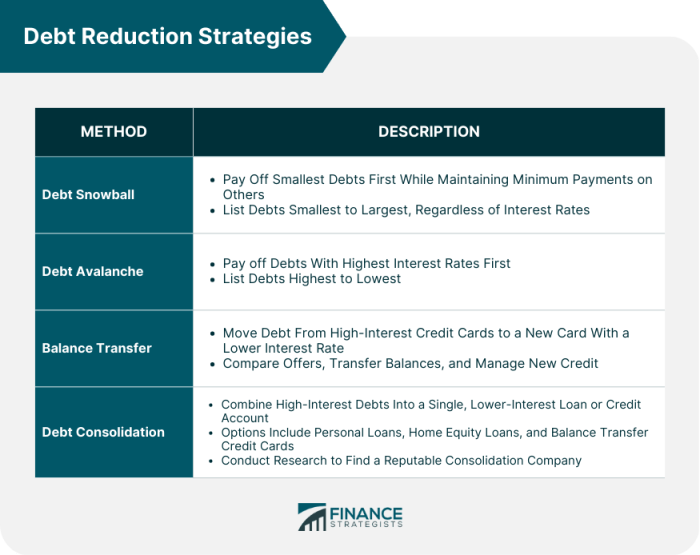
- Balance Transfers: This method involves transferring high-interest credit card debt to a new credit card with a lower interest rate.
- Personal Loans: Individuals can take out a personal loan to pay off multiple debts, consolidating them into one monthly payment.
- Debt Management Plans: These plans are offered by credit counseling agencies and involve negotiating lower interest rates or payments with creditors to help individuals pay off debt more effectively.
Benefits of Debt Consolidation
- Single Payment: Consolidating debts into one payment can simplify budgeting and make it easier to keep track of payments.
- Lower Interest Rates: By consolidating debts, individuals may qualify for lower interest rates, potentially saving money in the long run.
- Reduced Stress: Managing multiple debts can be overwhelming, and debt consolidation can help reduce stress by combining debts into one manageable payment.
Impact on Credit Scores
Debt consolidation can have both positive and negative effects on credit scores. While consolidating debts can lower credit utilization and improve credit scores in the long run, applying for new credit or closing old accounts can temporarily lower credit scores. It is important for individuals to carefully consider the impact on their credit scores before pursuing debt consolidation.
Debt Settlement
Debt settlement involves negotiating with creditors to settle debts for a lower amount than what is owed. This differs from debt consolidation, where multiple debts are combined into one monthly payment.
Negotiating with Creditors for Debt Settlement
When negotiating with creditors for debt settlement, it is essential to be prepared with a clear understanding of your financial situation. Communicate openly and honestly with creditors about your inability to repay the full amount. Offer a lump sum payment or a structured payment plan that works for both parties. It’s crucial to get any settlement agreement in writing to avoid misunderstandings in the future.
Consequences of Debt Settlement on Credit Scores
Debt settlement can have a negative impact on credit scores as the settled accounts will be marked as “settled” or “paid, settled” on credit reports. This negative mark can stay on credit reports for up to seven years, affecting the ability to secure credit or loans in the future. However, it is important to weigh the consequences of debt settlement against the benefits of resolving debts and avoiding bankruptcy.
Success Stories of Debt Settlement
Many individuals have effectively used debt settlement to manage their debts and achieve financial freedom. By negotiating with creditors and settling debts for a reduced amount, people have been able to avoid bankruptcy and regain control of their finances. Success stories often involve careful planning, budgeting, and communication with creditors to reach mutually beneficial agreements.
Debt Reduction
Reducing debt burdens is a crucial step towards achieving financial stability. By implementing effective strategies and prioritizing debts, individuals can work towards becoming debt-free and secure their financial future.
Importance of Budgeting and Financial Planning
Budgeting and financial planning play a key role in debt reduction. By creating a detailed budget, individuals can track their income and expenses, identify areas where they can cut back, and allocate more funds towards debt repayment.
Tips for Prioritizing Debts
- Start by listing all debts and their respective interest rates.
- Focus on paying off high-interest debts first to minimize interest payments.
- Consider using the snowball or avalanche method to tackle debts systematically.
- Avoid taking on new debt while working on paying off existing debts.
Role of Debt Reduction in Achieving Long-Term Financial Stability
Debt reduction is essential for achieving long-term financial stability as it allows individuals to free up resources that can be invested or saved for future goals. By eliminating debt, individuals can reduce financial stress, improve credit scores, and build a solid foundation for a secure financial future.
In conclusion, weighing the options of Debt Consolidation vs Debt Settlement is crucial in achieving financial stability and freedom. Make an informed choice tailored to your unique situation for a debt-free future.
Questions and Answers
Which option is better for improving credit scores: Debt Consolidation or Debt Settlement?
Debt Consolidation usually has a less negative impact on credit scores compared to Debt Settlement, as it involves paying off debts in full.
Can I switch from Debt Consolidation to Debt Settlement if needed?
It’s possible to explore Debt Settlement if Debt Consolidation isn’t working for you, but it’s essential to understand the implications on your credit and financial situation.