Debt Management Solutions Effective Strategies for Financial Freedom

Debt management

Exploring the realm of Debt Management Solutions, this introduction draws readers in with a captivating narrative that sheds light on the significance of managing debt effectively. From defining debt management solutions to discussing various strategies for debt reduction, this overview sets the stage for a comprehensive exploration of this vital topic.

Introduction to Debt Management Solutions

Debt

Debt management solutions refer to strategies and tools designed to help individuals or businesses effectively manage and repay their debts. These solutions are crucial in maintaining financial stability and avoiding the negative consequences of overwhelming debt.

The Importance of Effective Debt Management

Effective debt management is essential for maintaining a healthy financial status and avoiding financial distress. By implementing the right debt management solutions, individuals and businesses can reduce their debt burden, improve their credit score, and regain control over their finances.

Common Types of Debt Management Solutions

  • Debt Consolidation: Combining multiple debts into a single loan with a lower interest rate, making it easier to manage and pay off.
  • Debt Settlement: Negotiating with creditors to settle debts for less than what is owed, providing a more affordable repayment option.
  • Credit Counseling: Working with a credit counselor to create a budget and repayment plan to manage debts effectively.
  • Bankruptcy: A legal process that can help individuals eliminate or restructure debts when other options are not feasible.

Examples of Situations Where Debt Management Solutions Can Be Beneficial

  • When facing high-interest rates on credit card debts, debt consolidation can help lower the overall interest paid.
  • For individuals struggling to make minimum payments on multiple debts, debt settlement can provide a more manageable repayment plan.
  • Businesses experiencing financial difficulties can benefit from credit counseling to restructure their debts and improve cash flow.

Debt Reduction Strategies

Debt management

Debt reduction is a crucial step towards achieving financial stability and freedom. By implementing effective strategies, individuals can gradually work towards paying off their debts and improving their overall financial health.

Debt Consolidation

Debt consolidation involves combining multiple debts into a single loan with a lower interest rate. This can simplify the repayment process and potentially reduce the overall amount of interest paid over time.

Debt Negotiation

Debt negotiation involves reaching out to creditors to discuss payment plans or settlements that are more manageable for the individual. This approach can help reduce the total amount owed and make it easier to repay the debt over time.

Snowball Method

The snowball method focuses on paying off the smallest debts first while making minimum payments on larger debts. Once the smallest debt is paid off, the individual can then apply the freed-up funds towards the next smallest debt, creating a snowball effect that accelerates debt repayment.

Tips for Implementing Debt Reduction Strategies

  • Assess your current financial situation and create a budget to track your income and expenses.
  • Identify high-interest debts and prioritize paying them off first to save on interest costs.
  • Consider seeking professional advice from credit counselors or financial planners to develop a customized debt repayment plan.
  • Avoid taking on new debts while working towards paying off existing ones to prevent further financial strain.

In conclusion, Debt Management Solutions offer a roadmap to financial stability and freedom by providing individuals with the tools and knowledge needed to tackle their debts head-on. By implementing effective strategies and making informed decisions, anyone can pave the way towards a debt-free future.

FAQ

What are Debt Management Solutions?

Debt Management Solutions encompass various strategies and tools designed to help individuals effectively manage and reduce their debts. These can include debt consolidation, negotiation with creditors, and implementing structured repayment plans.

Why is effective debt management important?

Effective debt management is crucial as it can help individuals avoid financial pitfalls, reduce stress, improve credit scores, and ultimately achieve financial freedom by paying off debts efficiently.

What are some common types of debt management solutions available?

Common types of debt management solutions include debt consolidation loans, debt management plans, debt settlement programs, and credit counseling services. Each option caters to different financial situations and goals.

How can individuals start implementing debt reduction strategies?

Individuals can begin implementing debt reduction strategies by creating a budget, prioritizing debts, exploring debt consolidation options, negotiating with creditors, and seeking professional guidance if needed. It’s essential to take proactive steps towards reducing debts for long-term financial well-being.

How to Reduce Student Loan Debt Strategies and Tips for Financial Freedom

Debt loan

Exploring the realm of reducing student loan debt, this introduction delves into practical strategies and insightful tips to achieve financial freedom. From understanding the impact of student loans to seeking professional guidance, this guide offers a comprehensive approach to managing and minimizing debt effectively.

Understanding Student Loan Debt

Student loan debt refers to money borrowed by students to finance their higher education expenses. Unlike other types of debt, student loans typically have lower interest rates and offer more flexible repayment options. However, they cannot be discharged through bankruptcy in most cases, making them a long-term financial commitment.

Impact of Student Loan Debt

Student loan debt can have a significant impact on individuals’ financial health. It can lead to delayed savings, limited opportunities for investments, and even difficulty in qualifying for other types of loans, such as mortgages. The burden of student loan debt can also affect mental health and overall well-being.

Statistics on Student Loan Debt

  • The average student loan debt amount in the United States is around $30,000 per borrower.
  • Over the years, student loan debt has been steadily increasing, with more and more students relying on loans to finance their education.
  • Currently, student loan debt in the U.S. totals over $1.5 trillion, affecting millions of individuals and families nationwide.

Strategies for Managing Student Loan Debt

Student reduce loan debt ways facts

Managing student loan debt can be daunting, but with the right strategies in place, it is possible to effectively handle your payments and reduce your overall debt burden.

Creating a Budget for Student Loan Payments

One of the key strategies for managing student loan debt is to create a budget specifically tailored to your loan payments. By outlining your income, expenses, and loan obligations, you can allocate a specific amount towards your student loans each month, ensuring timely payments and avoiding default.

Pros and Cons of Student Loan Consolidation

  • Pros: Student loan consolidation can simplify the repayment process by combining multiple loans into one, potentially lowering your monthly payments and interest rates. It can also extend the repayment period, making it more manageable.
  • Cons: On the flip side, consolidating your loans may result in paying more interest over time, and you may lose certain borrower benefits or repayment options available with individual loans. It’s essential to weigh the pros and cons carefully before opting for consolidation.

Loan Forgiveness Programs

Loan forgiveness programs offer a way to reduce or eliminate student loan debt by fulfilling specific requirements, such as working in public service, education, or qualifying non-profit organizations. These programs provide a valuable opportunity to lessen the financial burden of student loans over time and can be a beneficial strategy for managing debt.

Increasing Income to Repay Student Loans

One effective way to tackle student loan debt is by increasing your income. By earning more money, you can allocate a larger portion towards repaying your loans, helping you pay them off faster and reduce the overall interest accrued.

Part-Time Jobs

  • Consider taking up part-time jobs in your field of study or any other area where you have relevant skills. This can not only help you earn extra income but also provide valuable work experience.
  • Look for opportunities on campus or in the local community that offer flexible hours to accommodate your studies.
  • Part-time jobs can also help you build a professional network that may benefit your career in the future.

Freelancing

  • Explore freelancing opportunities in areas such as writing, graphic design, coding, or any other skill you have that is in demand.
  • Freelancing allows you to work on projects outside of your regular schedule, giving you the flexibility to manage your time effectively.
  • Use online platforms to find freelance gigs and build a portfolio to attract clients.

Side Hustles

  • Start a side hustle by turning your hobbies or interests into a small business. This could include selling handmade crafts, offering tutoring services, or starting a blog.
  • Side hustles can generate additional income streams that can be used to repay your student loans faster.
  • Research different side hustle ideas and choose one that aligns with your skills and interests.

Seeking Professional Help for Student Loan Debt

Debt loan

When dealing with overwhelming student loan debt, it can be beneficial to consult a financial advisor who specializes in student loans. These professionals can provide valuable guidance and advice on managing your loans effectively.

Role of Loan Servicers

Loan servicers play a crucial role in managing student loan repayment. They can assist borrowers in understanding their repayment options, help them enroll in income-driven repayment plans, and provide guidance on loan consolidation.

Resources for Students Struggling with Loan Repayment

There are various resources available for students who are struggling with loan repayment. These include loan forgiveness programs, deferment or forbearance options, and financial counseling services. By seeking help from these resources, students can find solutions to manage their debt more effectively.

In conclusion, navigating the complexities of student loan debt requires a proactive approach and informed decision-making. By implementing the strategies Artikeld here, individuals can work towards reducing their debt burden and achieving greater financial stability.

Helpful Answers

How can I increase my income to repay student loans faster?

You can consider taking on part-time jobs, freelancing, or side hustles to supplement your income and allocate more towards loan payments.

When should I seek professional help for student loan debt?

It might be beneficial to consult a financial advisor if you are struggling to manage your student loan repayment or need guidance on debt consolidation options.

Debt Reduction Programs for Families A Comprehensive Guide

Debt programs

Embark on a journey through the world of debt reduction programs tailored for families, exploring the ins and outs of financial management and stability.

From understanding the essence of debt reduction to practical steps in enrolling, this guide covers it all to empower families towards a debt-free future.

Introduction to Debt Reduction Programs for Families

Debt reduction programs are structured plans designed to help families manage and decrease their debt effectively. These programs typically involve financial experts who work with families to create a personalized strategy for paying off debt.

Families may find themselves in need of debt reduction programs due to various reasons such as overwhelming credit card debt, medical bills, student loans, or unexpected financial emergencies. These programs offer a systematic approach to tackling debt and regaining financial stability.

Benefits of Participating in Debt Reduction Programs

  • Consolidation of Debt: Debt reduction programs often involve consolidating multiple debts into one manageable payment, making it easier for families to keep track of their finances.
  • Lower Interest Rates: By negotiating with creditors, these programs can help lower interest rates on existing debts, reducing the overall amount owed.
  • Financial Education: Families participating in debt reduction programs often receive valuable financial education and guidance, helping them develop better money management skills for the future.
  • Stress Reduction: Dealing with debt can be incredibly stressful, and these programs provide families with a structured plan to alleviate financial pressure and anxiety.

Types of Debt Reduction Programs

Debt reduction programs offer families a way to manage and eliminate their debt burden effectively. There are several types of debt reduction programs available, each catering to different financial situations and needs.

Debt Consolidation

Debt consolidation programs combine multiple debts into a single loan or payment, usually with a lower interest rate. This simplifies monthly payments and makes it easier to track progress towards debt repayment.

Debt Management

Debt management programs involve working with a credit counseling agency to negotiate lower interest rates or payment plans with creditors. These programs help families create a structured repayment plan to gradually pay off their debts.

Debt Settlement

Debt settlement programs involve negotiating with creditors to settle debts for a lower amount than what is owed. While this option can reduce the total debt amount, it may negatively impact credit scores and require a lump sum payment.

Examples of Reputable Debt Reduction Programs

National Foundation for Credit Counseling (NFCC)

Offers credit counseling and debt management programs to help families get out of debt.

DebtWave Credit Counseling

Provides debt management programs tailored to individual financial situations.

Freedom Debt Relief

Specializes in debt settlement programs to help families negotiate and settle their debts.

Steps to Enroll in a Debt Reduction Program

Debt manage goals involve positive

To enroll in a debt reduction program, families typically follow a structured process that involves several steps to ensure eligibility and successful participation.

Eligibility Criteria for Families

  • Evidence of financial hardship or inability to meet current debt obligations.
  • A minimum amount of unsecured debt, usually around $5,000.
  • A steady income to make monthly payments towards the program.
  • Proof of residency and identification.

Documents Required for Enrollment

  • Copies of recent bank statements and pay stubs to verify income.
  • A list of all outstanding debts, including creditor names and amounts owed.
  • Personal identification documents, such as a driver’s license or passport.
  • Any legal documents related to outstanding debts, like collection letters or court orders.

Financial Education and Budgeting Tips for Families

Debt programs

Managing finances effectively is crucial for families to secure their financial future and avoid falling into debt. By incorporating smart budgeting strategies and enhancing financial literacy, families can achieve stability and long-term financial success.

Creating a Family Budget

Creating a family budget is the foundation of financial stability. Here are some tips to help families set up and stick to a budget:

  • Calculate total monthly income: Start by determining all sources of income for the family.
  • List all expenses: Make a comprehensive list of all expenses, including bills, groceries, and other necessities.
  • Set financial goals: Establish short-term and long-term financial goals to guide budget planning.
  • Track spending: Monitor expenses regularly to ensure they align with the budget.
  • Adjust as needed: Be flexible and adjust the budget as circumstances change.

Importance of Financial Literacy

Financial literacy plays a significant role in preventing future debt and ensuring financial well-being. Here are some reasons why financial literacy is crucial for families:

  • Empowerment: Understanding financial concepts empowers families to make informed decisions about their money.
  • Debt avoidance: Financially literate families are better equipped to avoid debt traps and manage their finances responsibly.
  • Planning for the future: With financial knowledge, families can plan for future expenses, emergencies, and retirement.

Working with Creditors and Negotiating Debt

When facing overwhelming debt, families can negotiate with creditors to reduce their financial burden. By effectively communicating with creditors and reaching agreements, families can take steps towards financial stability.

Negotiating Debt with Creditors

  • Initiate contact with creditors by explaining the financial difficulties faced by the family.
  • Propose a realistic repayment plan that fits within the family’s budget constraints.
  • Consider options such as debt settlement or debt consolidation to reduce the overall debt amount.
  • Request for lower interest rates or waived fees to make repayment more manageable.
  • Document all communication and agreements made with creditors for future reference.

Effective Communication with Creditors

  • Stay calm and respectful during conversations with creditors to maintain a positive relationship.
  • Clearly articulate the reasons for the financial hardship and the proposed solutions.
  • Be honest about the family’s financial situation and provide relevant documentation if necessary.
  • Ask questions to clarify any terms or conditions proposed by the creditors.
  • Follow up on agreed-upon arrangements and update creditors on any changes in the family’s financial status.

Impact on Credit Scores and Financial Stability

  • Debt negotiation may initially have a negative impact on credit scores as it involves restructuring or settling debts.
  • However, successfully negotiating and repaying debts can ultimately improve credit scores over time.
  • By reducing debt through negotiations, families can work towards achieving long-term financial stability and rebuilding their creditworthiness.

In conclusion, by embracing the strategies Artikeld in this guide, families can take charge of their finances, alleviate debt burdens, and pave the way for a more secure financial future.

FAQ Section

How long does it usually take to complete a debt reduction program?

It varies depending on the individual’s financial situation, but it typically ranges from 2 to 5 years.

Can participating in a debt reduction program negatively impact my credit score?

Initially, it may have a slight negative impact, but in the long run, successfully completing a program can improve your credit score.

Are debt reduction programs only for families with high levels of debt?

No, these programs are designed to assist families with any amount of debt seeking financial relief and stability.

Debt Reduction Strategies 2024 Effective Ways to Manage Debt

Debt reduction

Debt Reduction Strategies 2024 sets the stage for this enthralling narrative, offering readers a glimpse into a story that is rich in detail with casual formal language style and brimming with originality from the outset.

In the ever-evolving landscape of personal finance, finding the right strategies to reduce debt is crucial for a secure financial future. This article delves into the top debt reduction methods for 2024 and the importance of having a solid plan in place.

DEBT REDUCTION STRATEGIES 2024

Debt reduction strategies itsallyouboo

When it comes to tackling debt, having a solid plan in place is crucial for financial stability and peace of mind. In 2024, there are several effective strategies that individuals can consider to reduce and eliminate their debt.

Identifying the Top Debt Reduction Strategies

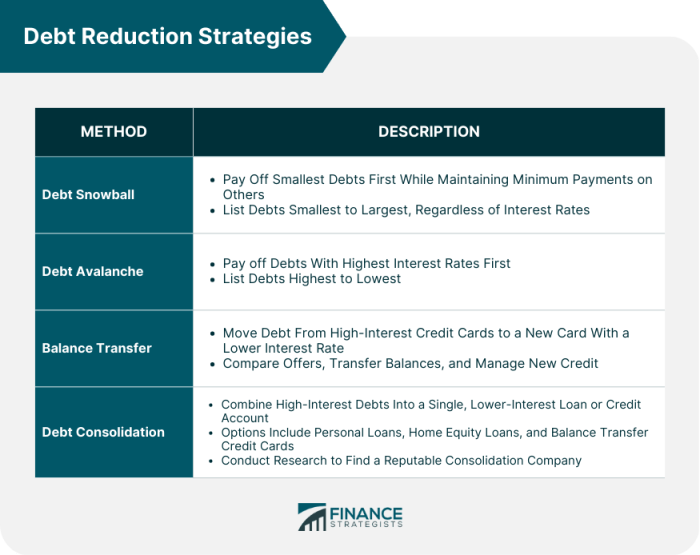
  • Debt Snowball Method: This strategy involves paying off the smallest debts first while making minimum payments on larger debts. Once the smallest debt is paid off, the amount that was being paid towards it is then rolled over to the next smallest debt, creating a snowball effect.
  • Debt Avalanche Method: With this approach, individuals focus on paying off debts with the highest interest rates first. By tackling high-interest debts, they can save money in the long run and accelerate the debt repayment process.
  • Debt Consolidation: Consolidating multiple debts into a single loan with a lower interest rate can make repayment more manageable. It simplifies the repayment process and potentially reduces the total amount paid in interest.

Importance of Having a Debt Reduction Plan

Having a debt reduction plan not only helps individuals stay organized and focused on their financial goals but also allows them to save money on interest payments. It provides a roadmap for becoming debt-free and achieving financial freedom.

Comparing Different Debt Reduction Methods

  • Effectiveness: The debt snowball method is effective for individuals who need motivation from quick wins, while the debt avalanche method may be more beneficial for those looking to save on interest costs.
  • Suitability: Debt consolidation is suitable for individuals with multiple high-interest debts who want to simplify their repayment process, whereas the debt snowball and debt avalanche methods are better for those who prefer a more structured approach.
  • Long-Term Impact: Each debt reduction method has its own long-term impact on an individual’s financial situation. It’s important to consider factors such as total interest paid, time to debt freedom, and overall financial goals.

DEBT REDUCTION

Debt reduction

Debt reduction is the process of decreasing or eliminating the amount of debt that an individual owes to creditors. This can involve creating a repayment plan, negotiating with creditors, or seeking assistance from debt relief programs.

Common Types of Debts

  • Credit card debt: Accumulated by using credit cards for purchases and not paying off the full balance each month.
  • Student loans: Money borrowed to fund higher education expenses that need to be repaid with interest.
  • Mortgage loans: Loans taken out to purchase a home, with monthly payments required to pay off the loan amount.
  • Car loans: Loans used to finance the purchase of a vehicle, with interest accruing over the loan term.

Importance of Debt Reduction

Debt reduction is crucial for financial stability as it can lead to a variety of benefits, including:

  • Lower financial stress: Reducing debt can alleviate the burden of monthly payments and interest charges, leading to less stress and anxiety.
  • Improved credit score: Paying off debts can positively impact your credit score, making it easier to qualify for loans and lower interest rates in the future.
  • Increased savings: By reducing debt, individuals can free up more money to save for emergencies, retirement, or other financial goals.
  • Financial freedom: Eliminating debt allows individuals to have more control over their finances and make decisions based on their priorities rather than debt obligations.

In conclusion, Debt Reduction Strategies 2024 presents a roadmap to financial freedom through effective debt management techniques. By implementing the right strategies and staying committed to reducing debt, individuals can pave the way for a stable and prosperous future.

Common Queries

What are the top debt reduction strategies for 2024?

The top strategies include prioritizing high-interest debts, creating a budget, negotiating with creditors, and considering debt consolidation.

Why is having a debt reduction plan important?

Having a plan helps individuals stay focused, track progress, and make informed financial decisions to reduce debt effectively.

What types of debts do individuals commonly need to reduce?

Common types of debts include credit card debt, student loans, medical bills, and personal loans.

How does debt reduction contribute to financial stability?

Reducing debt lowers financial stress, improves credit scores, increases savings potential, and opens up opportunities for investments.