Exploring the realm of Debt Settlement vs Debt Reduction, this article delves into the nuances of each method, shedding light on their advantages and disadvantages. With a focus on clarity and conciseness, readers are invited to uncover the intricacies of managing debt effectively.
As we navigate through the intricacies of debt management, it’s essential to grasp the fundamental disparities between debt settlement and debt reduction to make informed financial decisions.
Debt Settlement vs Debt Reduction
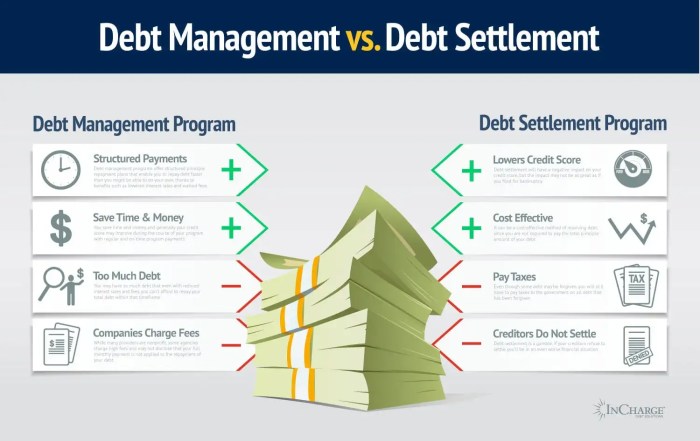
When it comes to managing debt, two common strategies are debt settlement and debt reduction. While both aim to help individuals get out of debt, they differ in their approaches and outcomes.
Key Differences
- Debt Settlement involves negotiating with creditors to pay off a portion of the total debt amount, usually in a lump sum. This can result in a lower overall payment but may negatively impact credit scores.
- Debt Reduction focuses on creating a structured plan to pay off the full amount owed over time, often with reduced interest rates or fees. This method can help maintain credit scores and financial stability.
Pros and Cons
Debt Settlement:
- Pros:
- May result in a significantly lower payment amount.
- Can provide a faster resolution to debt issues.
- Cons:
- Could negatively impact credit scores.
- May involve high upfront fees or taxes on forgiven debt.
Debt Reduction:
- Pros:
- Allows for a structured repayment plan.
- Helps maintain credit scores and financial stability.
- Cons:
- May not result in as significant of a reduction in total debt.
- Could take longer to pay off debt in full.
When to Use Each Method
Debt Settlement is most beneficial when:
- Individuals are unable to pay off the full amount owed.
- They are facing financial hardship and need a quicker resolution.
Debt Reduction is most beneficial when:
- Individuals have the ability to make regular payments over time.
- They want to maintain or improve their credit scores.
Debt Reduction
Reducing debt is a crucial step towards achieving financial stability and peace of mind. There are various strategies that individuals can use to effectively reduce their debt burden and work towards a debt-free future.
Debt Snowball vs Debt Avalanche
Two popular methods for debt reduction are the debt snowball and debt avalanche approaches. While both strategies aim to help individuals pay off their debts, they differ in their approach and prioritization.
- The debt snowball method involves paying off debts from smallest to largest, regardless of interest rates. This approach focuses on building momentum by clearing smaller debts first, which can provide a sense of accomplishment and motivation to tackle larger debts.
- The debt avalanche method, on the other hand, prioritizes debts with the highest interest rates. By tackling high-interest debts first, individuals can save money in the long run by minimizing the amount of interest paid over time.
Negotiating Lower Interest Rates
One effective way to reduce debt is by negotiating lower interest rates with creditors. This can help lower monthly payments and overall debt burden. Here are some tips on how to negotiate lower interest rates:
- Research and Compare: Before contacting creditors, research current interest rates and offers from other lenders to use as leverage during negotiations.
- Communicate Effectively: Clearly explain your financial situation and why a lower interest rate would benefit both you and the creditor.
- Be Persistent: Don’t be afraid to negotiate multiple times or escalate the conversation to a supervisor if needed.
- Consider Balance Transfer: Transferring high-interest balances to a lower interest rate credit card can also help reduce overall debt costs.
In conclusion, understanding the distinctions between debt settlement and debt reduction is crucial in devising a strategic plan to alleviate financial burdens. By weighing the pros and cons of each approach, individuals can empower themselves to take control of their financial well-being with confidence.
General Inquiries
What is the main difference between debt settlement and debt reduction?
Debt settlement involves negotiating with creditors to pay a lower amount than what is owed, while debt reduction focuses on creating a plan to systematically pay off debts in full.
Which method is more suitable for individuals with high levels of debt?
For individuals with substantial debt, debt settlement may offer a quicker resolution, but it can have a more significant impact on credit scores compared to debt reduction.
How can one determine the best approach between debt settlement and debt reduction?
It’s essential to assess individual financial circumstances, including the amount of debt, income levels, and credit score, to determine whether debt settlement or debt reduction is more appropriate.